The Hidden Factors That Make or Break Your Child’s Soccer Experience
Choosing a soccer club for your child sounds simple at first. Many Utah families look at the jersey, the field that is closest to home, or which team wins the most games. Those things are easy to see. They pop out during a quick visit or a weekend tournament.
The deeper pieces that shape your child’s growth are harder to notice. Things like the training plan, how coaches teach, and how players are supported over many years usually sit under the surface. Yet those are the parts that decide if your child grows in skill, confidence, and love for the game.
Spring in Utah can feel rushed. Tryout dates are coming, friends are talking about where they are going, and camp sign-ups are filling fast. It is easy to feel pressure and just pick the club that calls first or has the most familiar name.
We want to slow that feeling down. With a clear way to look at competitive youth soccer options, you can move from stressed and unsure to calm and confident. When you know what really matters, your choice will make more sense for your child and your family.
Beyond Wins and Rankings: Understanding the Club’s True
Short-term wins can look exciting. A team with lots of trophies seems like the right choice at first. But youth soccer is not only about today’s score. It is about who your child becomes over many seasons.
A strong club offers an age-appropriate path that starts with early development, moves into competitive youth soccer, and then gives chances for higher levels like ECNL as players grow and are ready. The focus is on long-term growth, not just winning the next game.
Another key part is vertical alignment. This means the club has one shared way to train, teach, and play across ages. When the U8 team and the high-school-age teams follow the same big ideas, it is easier for players to move up and keep building. They do not have to start over each time they change teams or coaches.
When you talk with a club, try asking questions like:
- How do you move players between levels during the year?
- What happens to a player who is developing later than others?
- How do you support early developers so they keep growing?
- What options exist for players who want college or higher-level soccer?
Clear answers to these questions show there is a real pathway, not just a collection of teams in different age groups.
Coaching Quality You Can’t See From the Sidelines
From the sideline, a coach might look great. They might be friendly, loud, or very positive. Those things can all be helpful, but they do not tell the whole story.
A truly developmental coach has both care and skill. They study the game and keep learning. They know how to teach game intelligence, not only basic skills. They can break down a situation on the field and help a young player understand what to do next time.
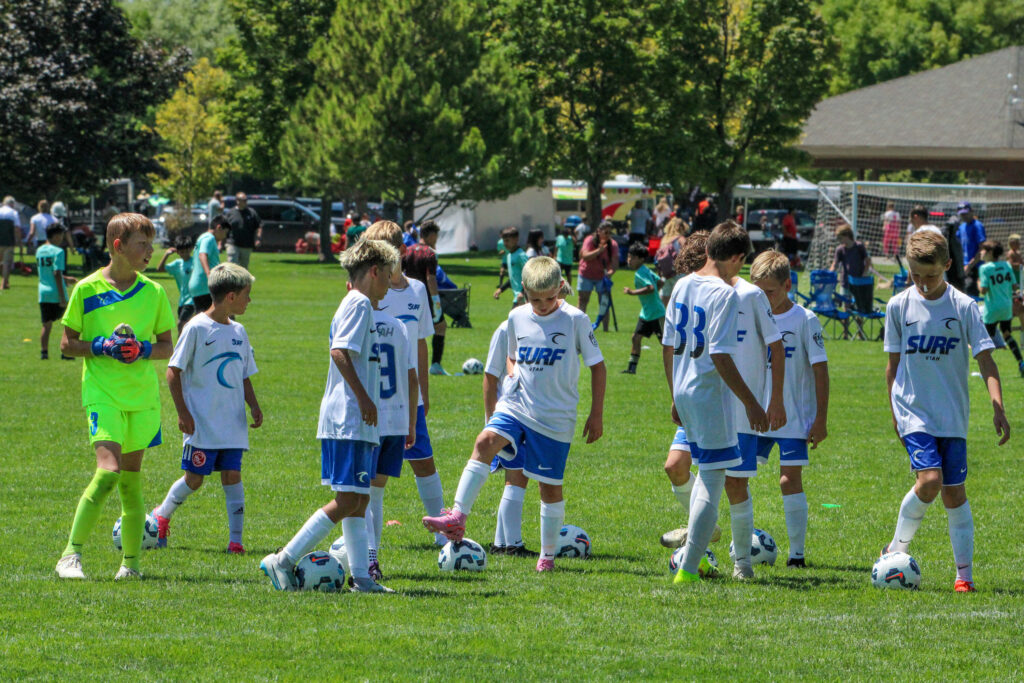
The training environment matters even more than game day. At practice, your child should touch the ball a lot, not wait in long lines. Sessions should have a clear structure, real intensity, and time for problem-solving. Mistakes should be treated as chances to learn, not reasons for fear.
Some ways to check coaching quality before joining:
- Watch a full training session from start to finish.
- Notice how many players are active at once.
- Listen to how the coach talks to players during errors.
- Ask how often the same coach stays with a group over seasons.
- Find out how coaches share feedback with both players and parents.
Games are only a small part of competitive youth soccer. Training is where the real growth happens.
Culture, Communication, and Character
Club culture is not a slogan on a banner. It is what your child feels at practice, before games, and in the car ride home. It shows up in small moments, like how teammates greet each other and how they act when they win or lose.
A healthy culture balances development and winning. Players are pushed to compete and give their best, but not at the cost of respect and fun. The goal is to grow strong people as well as strong players.
Strong clubs put character at the center of competitive youth soccer. They talk about resilience when things are hard, accountability for effort and behavior, and leadership in both big and small ways. Respect for opponents, referees, and teammates is not optional; it is expected.
Communication is another big part of culture. Families should know:
- How often will they hear from coaches and directors?
- How playing time is handled and explained.
- How feedback is shared with players during the year.
- What to do if there is a concern or conflict.
When communication is clear, small problems stay small. When it is not, small issues can turn into stress for both kids and parents.
The Real Costs of Competitive Soccer in Utah and How to Judge Value
Competitive soccer has many pieces, and it helps to understand how they fit together. Typical cost areas can include uniforms, league and tournament fees, travel, camps and clinics, and some optional extras like private sessions.
Instead of looking at one number only, think about the value. Ask how many training hours your child will get each week. Look at the quality of fields and facilities. Learn what support is available for goalkeepers, and how the club approaches college guidance and exposure for older players.
As spring tryouts get closer, it can help to:
- Talk as a family about what you can commit to for the full year.
- Ask clubs for a clear picture of yearly needs, not just the first month.
- Find out how a club partners with families who need help planning ahead.
The right club treats your family like a partner in the process, not just a number on a roster.
Tryouts, Spring Camps, and Choosing with Confidence
Spring is a great time to see a club in action. Open trainings, ID clinics, and camps let you watch how coaches run sessions and how players interact. You can learn a lot in just one visit if you know what to look for.
A simple checklist for your choice might look like this:
- Development pathway: Is there a clear path from younger ages up through elite levels like ECNL?
- Coaching quality: Do coaches focus on teaching, not just winning?
- Culture fit: Does the environment feel positive, challenging, and respectful?
- Communication: Are expectations for families and players clear?
- Total value: Do the time and resources you give match what your child receives?
At Utah Surf Soccer Club, we care about these deeper factors. We offer competitive youth soccer for boys and girls across Utah with a focus on long-term development, aligned pathways, and a training environment that helps players grow on and off the field. We welcome families who want to ask real questions, watch training, and make sure their child is in the right place for the long term.
Take The Next Step In Your Player’s Development
If your player is ready for a higher level of training and competition, our competitive youth soccer program provides a clear pathway to grow. At Utah Surf Soccer Club, we focus on developing confident, technically sound players who love the game. We invite you to explore tryout options or reach out with questions so we can help you find the right fit. If you’d like to talk with our staff directly, please contact us.